



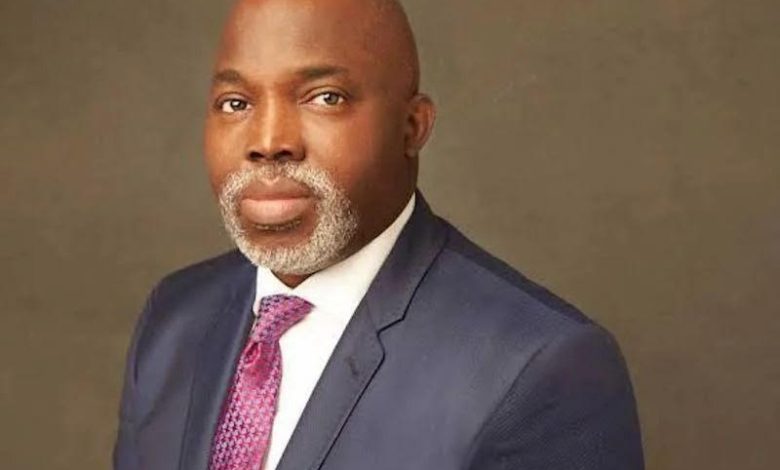
Former Nigeria Football Federation (NFF) president Amaju Pinnick says the Super Eagles’ failure to qualify for the 2026 FIFA World Cup was influenced by the revamped qualification format, insisting that Nigeria would have made it under the old system used in 2018.
Pinnick made the remarks on Monday at the Big Sport Dialogue in Ikoyi, where he fielded tough questions from Abayomi Ogunjimi, National President of the Authentic Nigeria Football and Allied Sports Supporters Club.
Ogunjimi challenged Pinnick on what Nigeria gained from his influence during his time as CAF First Vice President and FIFA Council member, noting that the country missed the 2022 World Cup under his leadership and is now set to miss the 2026 edition.
Pinnick, however, rejected the narrative that the Super Eagles’ recent failures were tied to his administration.
“You said we did not qualify under me. We did not lose, and we did not win,” he said, arguing that structural changes in the qualification format cost Nigeria the chance to qualify.
According to him, the 2018 format—which featured group-stage battles—favoured Nigeria, who topped a tough group containing Zambia, Cameroon, and Algeria with two games to spare.
He highlighted some of the national team’s achievements during his tenure, including high-profile wins over Argentina and Poland, and a strong performance against England. Pinnick also claimed personal involvement in the design of the Super Eagles’ now-iconic kits.
“This jersey you are seeing today, I sat with Nike and told them to freestyle,” he said.
Pinnick stressed that one of his major successes was securing widespread Nigerian representation on CAF and FIFA committees.
“During my period as a member of the CAF Council, I had a minimum of twenty-five Nigerians in various committees. That was unprecedented.”
He declined to reveal some of his contributions, insisting that certain interventions were not for public discussion.
“There are some things that are better left unsaid. Those who know, know,” he added.
Pinnick also noted that Nigerians currently hold significant positions in global football governance, including roles on the FIFA Ethics Committee and FIFA Media Committee, citing Aisha Falode as one of the beneficiaries.
Despite Nigeria’s setbacks, Pinnick said he remains committed to advancing the country’s interests. He revealed that he now serves as vice president of the committee for the 2026 World Cup, a role he described as crucial—not just for Africa, but for global football—even though Nigeria will not participate in the tournament.
He concluded by urging Nigerians to prioritise positivity and constructive dialogue.
“We should be emphasising only the positives. We only emphasise negatives, and it does not take us anywhere in this country.”